Moran, a stocky man with thin lips, a broken nose and salt and pepper hair, extended a muscular hand in welcome in a gesture that could have been interpreted as a blow to the stomach. “So, London doesn’t trust us to keeps tabs on one Fenian,” he said, half mockingly. Templeman decided to omit reference to the interest of MI5 in O’Connor. “The RUC has authority in Ulster,” he said, “but this man has come a long way inspector, with little obvious reason, so the Met is curious about his motives.” Moran fixed a distrustful gaze on Templeman. “Then we should take him into custody for a wee chat.” “No inspector, my orders are to watch O’Connor, not to arrest him.” Moran offered a meagre nod in reply, but his mouth was turned down in disappointment. “Where’s our man?” he barked over his shoulder. “Radio car is following, heading to West Belfast, in the company of another suspect,” said a detective dressed in a pea coat and heavy crew neck sailor’s sweater standing at the open door of a Ford Zephyr. Templeman looked at Moran’s team of officers, all were tough looking uncompromising men, like Moran. A gust of wind came in from Belfast Lough, raw and heavy with rain, that battered the quayside and the low sheds and buildings: the policemen stood unperturbed. “We’ll take over from now,” said Moran, “you get yourself a wee sleep inspector, there’s nothing for you to do.”
O’Connor travelled to a terraced house in West Belfast; he slipped inside as unobtrusively as if he were returning to his own home. Moran’s team set up surveillance in a flat above a corner shop, with a clear view along the row of terraced houses, but by the next morning O’Connor had disappeared.
Templeman was summoned to an RUC station and directed to the office of the local Special Branch chief inspector. The chief inspector nodded disparagingly as Templeman walked in, Moran and his superior were the room’s only occupants. Templeman assessed him to be about fifty years of age, with greying hair, and tired eyes. He was smoking, an open packet of Capstan Full Strength cigarettes lay on the desk, next to a silver lighter. He did not introduce himself, the sign on the door had announced that the room was the domain of a Chief Inspector Walsh.
“So, Andy,” said Walsh, referring to Moran, who stood to attention before him, “this is quite an embarrassing fuck up for us, particularly as we have our man here from London. How did O’Connor get away?”
As he spoke, the weak morning light of a hesitant spring fell upon the desk from the window at his shoulder, and a bus full of men going to the shipyard to start their shift, changed gear, and juddered up the road outside. Moran, not comfortable with the challenge, but smarting at the failure of his officers, hesitated.
“Last night, down the alley at the back, then out through one of the houses further along. We have reason to believe that he is still in West Belfast,” Moran replied, averting Walsh’s gaze.
“Then you’d better find him inspector! I’ll let London know what’s happened.”
“Yes sir.”
A peal of static on the radio, echoing in the darkness, as rain pattered on the roof and bonnet, announced that something had taken place, that required the observation post to break silence.
“He’s on the move!” shouted Moran as he held the handset in triumph. He wound down the window and shouted through the rain to the other vehicle, the engine of the Triumph already grunting into life, as a plume of oily smoke exited the exhaust pipe. “He’s across the border! One mile! You know where to stop the vehicle!”
“What are you doing?!” shouted Templeman.
“He’s been in the Republic damn it! He could be bringing arms and explosives into Ulster! He has to be arrested, taken in for questioning!”
“This is a surveillance operation, there are to be no arrests!”
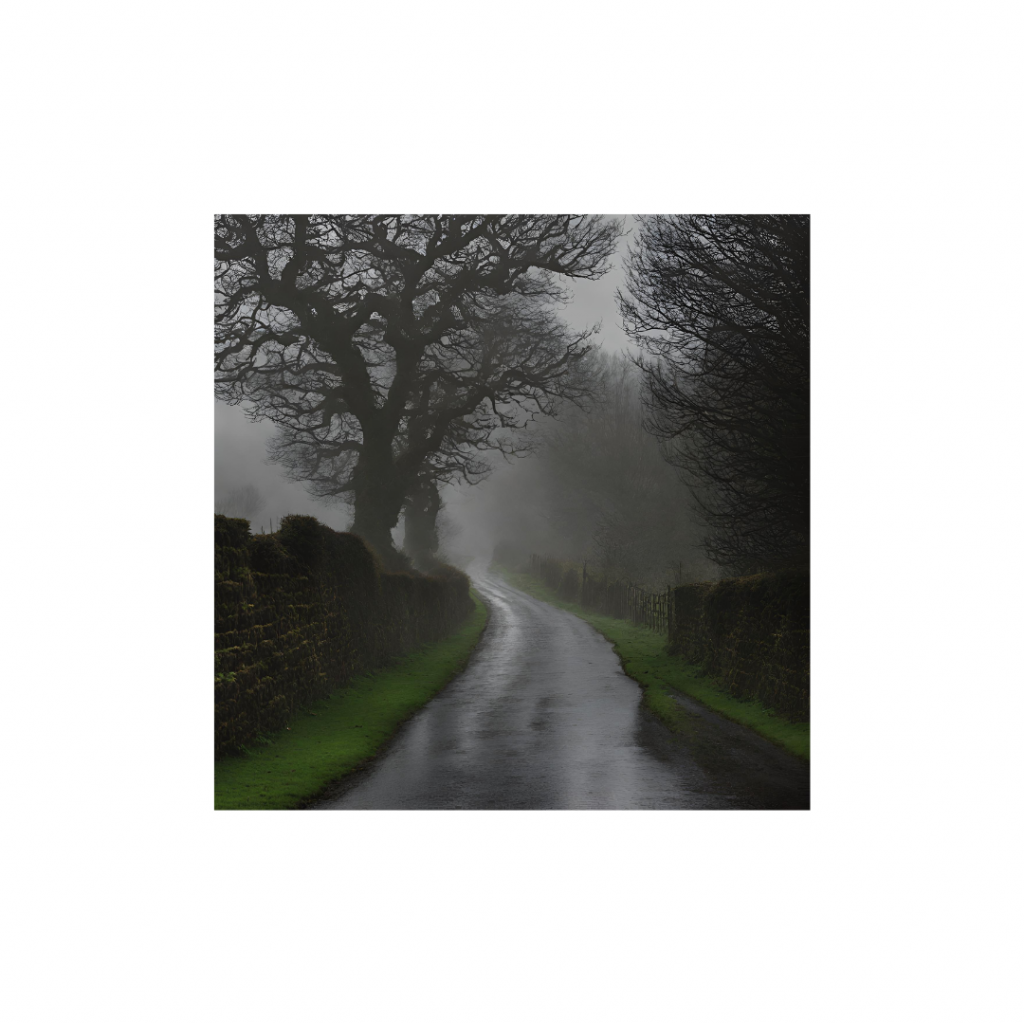
Moran paid no attention to Templeman’s protests and pointed to the road; the driver let in the clutch and the Zephyr tore at the roadside gravel, which flew up like shrapnel, pelting the dry-stone wall that enveloped the neighbouring field. The Zephyr gripped the tarmac as it sped forward, the taillight configuration of the Triumph disappearing and returning again ahead of them in the rain and the bends of the crooked road. A half mile on, at a sharp bend like a snake’s curling back, the RUC cars halted, their bonnets jutting into the dark ahead. With the engines and lights extinguished, they sat in silence; Templeman heard only the sound of the rain and then a faint click as Moran withdrew his pistol from its leather holster.
Through the rain, the sound of a car could be heard in the distance, bearing down upon them unseen. At Moran’s signal, the lights of the Zephyr and the Triumph blasted the enveloping darkness at full power; the oncoming hurtling car was caught in four powerful watery beams: its shape at once flattened and made more terrifying as a vision of glass and steel as it negotiated the sharp bend ahead. The car braked, spun, lost control on a slick of water and mud, and careened off the road. In half-darkness it crashed into an embankment, the wind screen splintering into a crude web. The RUC men vaulted from their cars and ran, guns drawn, toward the wreck. O’Connor was pulled out, and thrown down onto the roadway, an RUC pistol pointing at his head. The other occupant, the driver, fought as he was pulled from the car; his head already bloodied from the impact, he was punched and struck across the face with the butt of a pistol, he rolled across the bonnet to fall into the roadway. Templeman got out of the Zephyr and walked over to Moran, anger rising in his fists, as the rain fell in aimless spasms.
“You won’t get away with this Moran!” he shouted.
“I don’t see that it is your fecking concern! This is an RUC operation, the border is just a mile away,” and Moran pointed into the black night, “and these men may have brought weapons across it!”
“You bastard!”
Copyright © David Alexander 2024