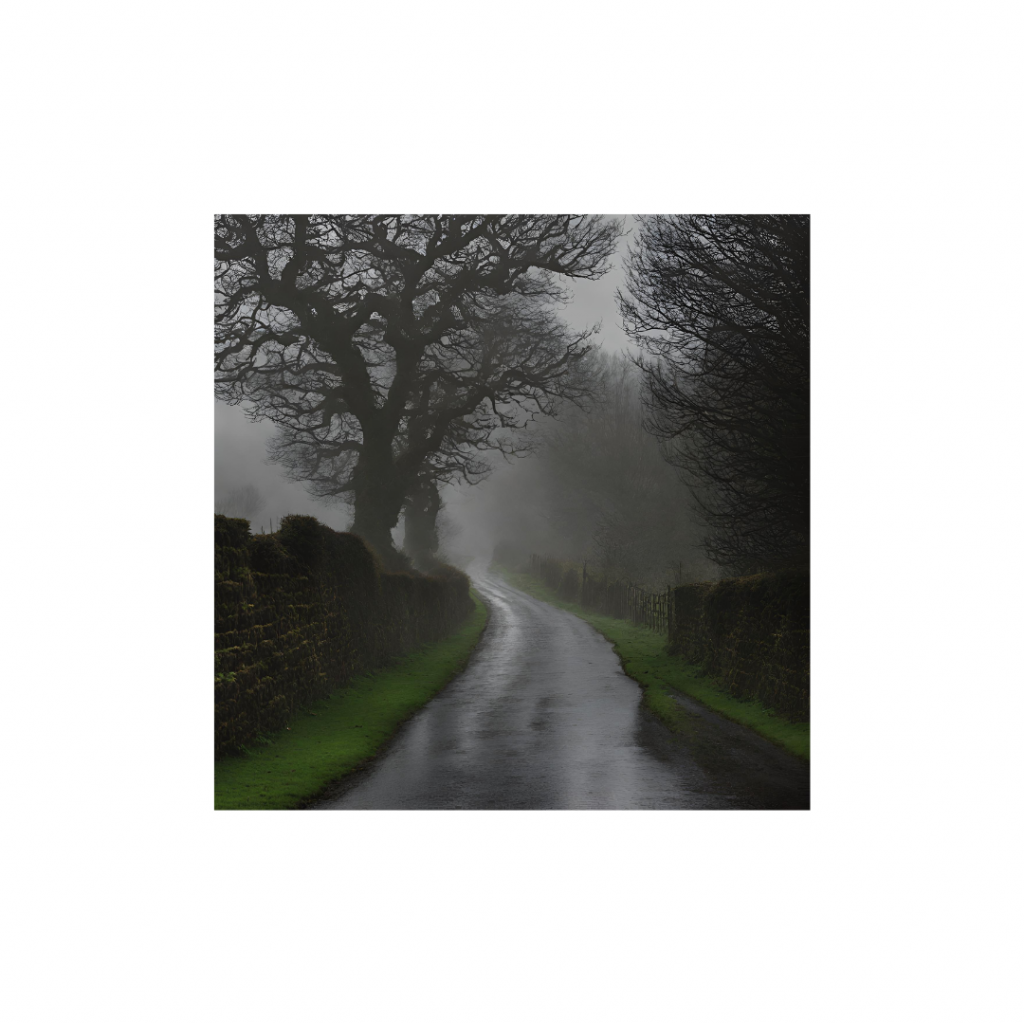
The road from the village of Newtonbutler in Fermanagh toward the town of Clones in the Republic, crossed fertile farmland that rose and fell in thick waves of earth. Closer to the border the road passed between two low ridges, the land there was green and wooded and watered by countless streams and brooks. On a March night, on a stretch of road illuminated by faint moonlight that had escaped from clouds that slowly rolled through the sky, two saloon cars were parked. John Templeman sat in one vehicle; in front of him were two Royal Ulster Constabulary officers: the driver of the vehicle, a young detective who spoke rarely, and his superior officer, an inspector by the name of Moran, who squinted intently into the handset of the vehicle’s radio in the dark interior. The other vehicle held four, armed RUC detectives, its windows misted from their collective expectant breath.
“Where is our man, inspector?” Templeman asked, leaning forward, to sit crouched on his haunches. Moran turned his head, a scowl of irritation breaking out on his face at Templeman’s question.
“He’ll be here,” he replied in flat tones, “the observation post reports no activity, but he’ll be close to the town. He thinks that he can cross the border here and not be detected but he’s in for a shock, that he is.”
The observation post to which Moran referred lay hidden in a copse on the northern ridge, and afforded a clear view of the surrounding farmland, the border, and the sleeping town beyond. Templeman sank back dejectedly onto the seat and scanned the sky; it had rained heavily during the day, the officers in the observation post had stayed at their vantage point since the early afternoon without relief. The officers would be cold and wet by now: Templeman visualised a flooding trench topped with a tarpaulin and foliage. Moran was not troubled by the weather: he had a temperament that defied storms and snow. From brief snatches of conversation between them, Templeman had learned two things only about Moran – that he had served in the Army in the Ulster Division and hobbled for two miles during the Italian campaign to a field dressing station with a mangled bloody foot, and broken leg, when a German landmine blew off the front axle of the jeep in which he was travelling; and that his own father had been a middle weight boxing champion in East Belfast.
The man the officers were waiting for was Patrick O’Connor, a suspected IRA quartermaster, and native of Derry, who had travelled from his home in London to Belfast four days before. Templeman hazarded a look at the luminous dials of his wristwatch – it was a quarter after two. A rain bearing cloud obscured the moon, the quaint half-light that had bathed the vehicles was extinguished and a hesitant rain began to fall.
“Come on ye bastard,” said Moran under his breath.
“How good is the intelligence Moran?” asked Templeman.
“Solid,” replied Moran over his shoulder, “solid as granite. He was seen in Dublin; and followed. He has a ferry to catch from Belfast, he’ll come to us.” Moran gripped the radio handset as if he could crush it.
In London, McCreadie had briefed Templeman about the job; Brandon Phillips and another Service officer, who said nothing and watched the others with untrusting eyes, had been present in McCreadie’s office. “Is that clear inspector?” McCreadie had asked, Templeman considered his response. “Yes sir.” “Questions?” The superintendent frequently spoke in brief spasms, employing single words differentiated only by a change in tone, a form of Orwellian Newspeak taken as a blueprint for the future of law enforcement. Templeman framed a question, his curiosity aroused by the presence of Phillips. “There is one thing sir,” he said, “there has not been significant IRA activity for years. Why are we so interested in O’Connor?” Philips turned around and looked momentarily displeased before his mask assumed its bland and unperturbed pattern, McCreadie coughed nervously. “There is intelligence that a new campaign is being planned. Follow O’Connor inspector, report where he goes and who he associates with.”
Cosby picked Templeman up from his flat and drove him to Euston Station on a bleak March dawn; another officer had followed O’Connor to the station and waited for them. O’Connor had a train ticket for Liverpool, and another for the Belfast ferry. As the car swept along Euston Road, the dark form of the new station presented itself on the skyline, the old station now smashed in the drive for vengeful modernity: a pile of earth like a small mountain range, where a platform had once been, waited now to be cleared away by a bulldozer. The wrecked site provided good cover for surveillance; O’Connor was easily recognisable from his Branch registry photographs – tall and thin, clean shaven with a mop of black hair tending toward his collar like one of The Beatles. He carried a small flight bag bearing the legend BEA in white letters on a red background, with British European Airways spelled out beneath on the fabric. Templeman was struck by the thought that it was as if O’Connor didn’t care if he was seen, or that he wanted to be recognised.
At Liverpool, the ferry, dwarfed by the grey frontage of the Royal Liver Building, waited at the quayside. Templeman watched as O’Connor climbed the gangway and disappeared into the ship, then he too climbed up; for an instant a sharp memory of ascending to a troop ship in sweltering heat in Alexandria harbour on the return from Suez in fifty-six filled his mind; he had sensed then that he had been on a futile journey to a foreign land. The ferry slipped from the quayside and turned toward the Irish Sea. Once underway, Templeman escaped the biting wind and went to the restaurant, a bleak arrangement of steel and fluorescent strip lighting, to assuage a hunger aroused by the salt spray. At Belfast Docks, Templeman met Moran and his surveillance team of RUC Special Branch officers.
Copyright © David Alexander 2024